Atomic energy organisation in Iran says Bushehr nuclear power plant 'safe and stable' The Atomic Energy Organization of Iran (AEOI) has said that the Bushehr nuclear power plant is "safe and stable" in response to circulating claims that it was targeted. "The Bushehr nuclear power plant is in a completely normal, safe, and stable state, and all its units and facilities are operating continuously and in accordance with standard procedures," the organization said.
Trump says Strait of Hormuz open to commercial traffic US President Donald Trump said that the Strait of Hormuz is open to commercial traffic, in comments made during an interview on NBC's Meet the Press. The US and Iran continue to trade attacks that have raised concerns over safety on one of the world’s most important oil shipping routes.
UAE oil production hits record high after leaving Opec The UAE boosted oil production to an all-time high last month, shaking off concerns about Iran’s control of the Strait of Hormuz and capitalising on its departure from the Saudi -led energy alliance Opec. The UAE pumped 4. 1 million barrels per day (bpd) of oil in June, the International Atomic Energy Agency (IAEA) said in a report released on Friday.
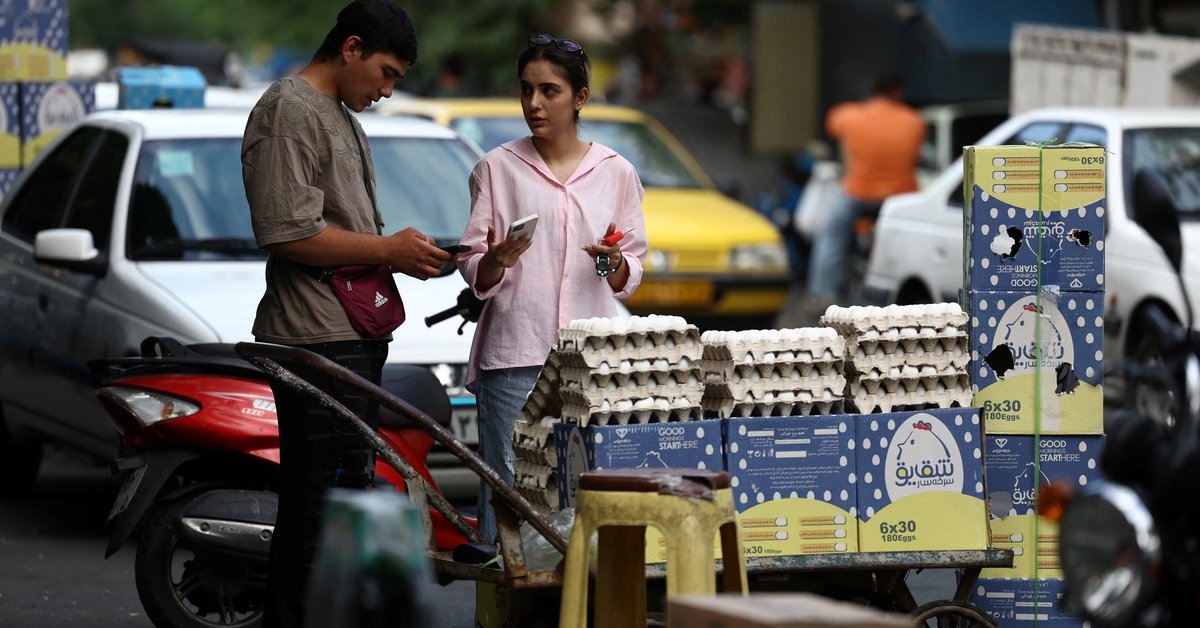
War has erased Iran’s already weak growth prospects. The economy shrinks as prices rise at one of the region’s fastest rates, forcing households to bear war, sanctions and years of economic mismanagement through fewer jobs, weaker incomes and collapsing purchasing power.
Exclusive: Syria, Iraq and US plan to unveil Mediterranean pipeline deal to bypass Strait of Hormuz Submitted by Sean Mathews on Sat, 07/11/2026 - 10:14 The Trump administration will announce plans to resurrect a five-decade-old pipeline running from Iraq to the Syrian port of Baniyas Oil facilities at the Baniyas port refinery on the Mediterranean Sea, Syria, on 15 April 2026 (Bakr Alkasem/AFP) Off Iraq , Syria and the US plan to revive a historic 500-mile pipeline to Syria's Mediterranean coast as part of efforts to reduce Iran’s control of the Strait of Hormuz, senior Iraqi and regional officials have told Middle East Eye. An agreement to revive the pipeline, originally running from the northern Iraqi city of Kirkuk to Syria’s coastal town of Baniyas, is expected to be unveiled next week when Iraqi Prime Minister Ali al-Zaidi meets US President Donald Trump at the White House, the sources told MEE. Tom Barrack, Trump’s ambassador to Turkey and envoy to Syria and Iraq, has been working on the details of the agreement before Zaidi’s visit, which is also expected to include a stop in Texas, the US's energy hub state.
IEA: US-Iran escalation threatens 2027 oil surplus forecast The International Energy Agency (IEA) predicts supply will expand by 7. 5 million bpd next year after a 3. 7 million bpd contraction this year, but that is contingent on improved Hormuz transits.
Plans specify tolls must not be compulsory, as US officials urge Iran to make public statement that strait is open and that shipping can safely pass Europe is studying proposals that may allow the charging of navigational fees in the strait of Hormuz so long as the tolls are not compulsory and have the support of the UN agency that regulates maritime transport. Britain’s deputy prime minister, David Lammy, said the imposition of compulsory tolls would be disastrous. But some of his cabinet colleagues said they recognised that systems of payments for specific navigational services were permissible in many natural waterways, including the strait of Malacca and the Channel.
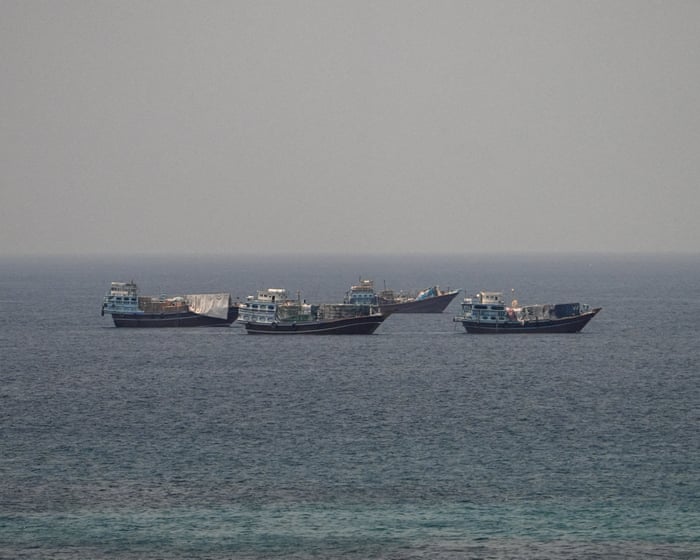
Report: Traffic in Hormuz falls sharply, only six vessels passed on 9-10 July night Ship-tracking firm Windward said just six vessels crossed the Strait of Hormuz on the night of 9-10 July, compared with 18 to 22 a few days ago. This was the third night of reduced traffic in the critical waterway, where Iranian attacks on ships led to a renewed wave of US strikes and Iranian counterattacks on the neighbouring Gulf nations. Outbound sailings have nearly stopped, just one vessel last night, against 15-21 on 5-7 July, Windward said in a post on X.
Washington reportedly expects Tehran to accept its terms after talks in Oman on Saturday The US is demanding that Iran publicly declare the strategic Strait of Hormuz fully reopened to navigation and pledge not to attack tankers transiting the waterway, which carries around a quarter of the world's seaborne oil and LNG trade, several news outlets reported on Friday.
Washington reportedly expects Tehran to accept its terms after talks in Oman on Saturday The US is demanding that Iran publicly declare the strategic Strait of Hormuz fully reopened to navigation and pledge not to attack tankers transiting the waterway, which carries around a quarter of the world's seaborne oil and LNG trade, several news outlets reported on Friday.
Washington reportedly expects Tehran to accept its terms after talks in Oman on Saturday The US is demanding that Iran publicly declare the strategic Strait of Hormuz fully reopened to navigation and pledge not to attack tankers transiting the waterway, which carries around a quarter of the wo
Washington reportedly expects Tehran to accept its terms after talks in Oman on Saturday The US is demanding that Iran publicly declare the strategic Strait of Hormuz fully reopened to navigation and pledge not to attack tankers transiting the waterway, which carries around a quarter of the wo
Washington DC [US], July 11 (ANI): The United States on Friday imposed sanctions on Dubai-based Iranian 'financier' Ali Ansari, following Tehran's resumption of attacks on international shipping in the Strait of Hormuz.
US issues fresh Iran-related sanctions The US issued new Iran-related sanctions on Friday targeting a key financier for Iran's new leader, Mojtaba Khamenei and 13 other individuals and entities, following Tehran's resumed attacks on oil tankers in the Strait of Hormuz, the Treasury Department said. The sanctions took aim at Ali Ansari, an Iranian banker and businessman based in Dubai who had previously been sanctioned by Britain for his role in financially supporting the activities of Iran's Revolutionary Guards and other entities, Treasury said. Treasury said Ansari had diverted publicly funded wealth into an extensive overseas portfolio of real estate and commercial holdings to enrich himself, government elites, and the Islamic Revolutionary Guard Corps (IRGC).
Companies desperately want to get their ships moving through the Strait of Hormuz, but face mounting risks. “Things are becoming uglier by the minute,” one executive said.
UAE oil production hits record high after leaving Opec Submitted by Sean Mathews on Fri, 07/10/2026 - 17:24 The Gulf state's surging production shows how it has worked around Iran's control of the Strait of Hormuz An Abu Dhabi National Oil Company facility in the United Arab Emirates, on 3 March 3 2026 (Ryan Lim/AFP) Off The UAE boosted oil production to an all-time high last month, shaking off concerns about Iran’s control of the Strait of Hormuz and capitalising on its departure from the Saudi -led energy alliance Opec. The UAE pumped 4. 1 million barrels per day (bpd) of oil in June, the International Atomic Energy Agency (IAEA) said in a report released on Friday.
Russia open to Turkey selling S-400 air defence systems to UAE, sources say Submitted by Ragip Soylu on Fri, 07/10/2026 - 16:13 Sources say negotiations have been under way for months, but Moscow’s final approval is still required A Russian military cargo plane unloading an S-400 missile defence system at the Murted military airbase, northwest of Ankara, in August 2019 (AFP) Off The Russian government views the potential sale of S-400 air defence systems currently operated by Turkey to the United Arab Emirates in a “positive light”, multiple sources familiar with the issue told Middle East Eye, while cautioning that negotiations have yet to be completed. The Russian S-400 systems, purchased by Turkey in 2019, have been a major headache for Ankara. The acquisition led to Turkey’s removal from the fifth-generation F-35 fighter jet programme and triggered a series of US sanctions on Turkey’s defence industry.
The Strait of Hormuz disruption is set to trigger the first annual decline in crude consumption since Covid-19, the energy watchdog says Global oil demand is on track to post its first annual decline since the Covid-19 pandemic as the US-Iran war has severely disrupted Middle Eastern oil production and exports, the International Energy Agency (IEA) has said.
Britain has enacted legislation creating powers that could allow the government to designate Iran's Islamic Revolutionary Guards Corps under a new legal framework targeting organizations linked to hostile foreign state activity as of July 2026.