US and Iran exchange strikes after two US deaths in Jordan attack
US forces target Iranian sites for the eighth night in a row, while Iran says it fired drones at the US military in Kuwait.
US forces target Iranian sites for the eighth night in a row, while Iran says it fired drones at the US military in Kuwait.
The announcement comes after Jordan said it intercepted 10 Iranian missiles fired into its airspace overnight into Saturday.
The US command says it is conducting more strikes to degrade Iran's armed forces, as Iran reports explosions near the Strait of Hormuz.
There have also been several unsuccessful attacks in a region where piracy appears to be making a comeback.
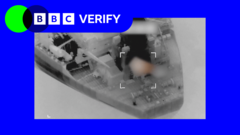
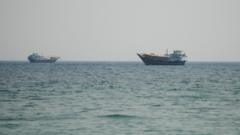
The US military targeted an unladen oil tanker which it said was heading for the key Iranian oil terminal on Kharg island.
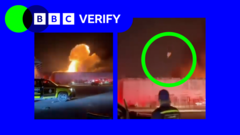
Verified video shows an Iranian drone hitting a warehouse in Kuwait
Explosions were heard across Iran overnight, shortly after neighbouring Gulf states began to report attacks.
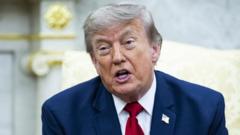
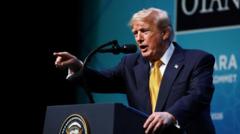
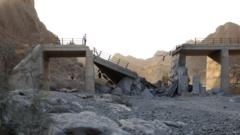
US President Donald Trump vowed to strike Iran's bridges and power plants next week if the country does not return to talks.
Trump's comments aired as the two countries exchanged fire for the fourth day in a row and the US resumed blockading Iranian ports.
The abrupt about-face from the US president was the latest twist in a conflict that has now lasted more than four months.
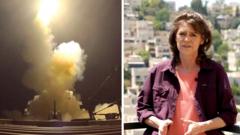
The BBC's Barbara Plett Usher examines the latest tensions over the key international shipping channel.
Control of the waterway has become a key point of contention between the US and Iran, as a ceasefire deal falters.
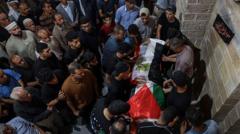
A senior officer in the Hamas-run police force was among those killed in the strike, which Israel's military says targeted "terrorists".
The Iran-backed Houthis blame Saudi Arabia for the attack in Yemen's capital and say they targeted Abha airport in response.
US Central Command says it attacked military targets in Iran and at sea.
Within hours of fresh US attacks, Iran said it had struck US military bases in Kuwait, Jordan and Bahrain.
Mojtaba Khamenei says vengeance is "inevitable" for the killing, which happened on the first day of the US-Israeli war on Iran.
Centcom says it hit 90 Iranian targets in the latest round of strikes, with the Iranian health ministry saying 14 people were killed since Tuesday.
Aid worker Mohammed al-Wahidi had become a prominent humanitarian figure during the Israel-Hamas war.
Speaking at a Nato summit, the president says the US will "probably" strike Iran again but added that "anything that happens will be over quickly".